



TRAINING THE NEXT GENERATION OF ANALYSTSIN GEOPOLITICAL, SECURITY, AND DEFENSE ISSUES
In a world where geopolitical balances are shifting rapidly, hybrid wars, tensions between major powers, disinformation, and cyberthreats are profoundly transforming international relations.
Faced with these new forms of conflict, public institutions, international organizations, think tanks, and defense actors are seeking professionals capable of understanding the balance of power, analyzing crises, and deciphering contemporary strategic dynamics.
HEIP’s Bachelor’s Degree in Geopolitics, Security & Defense allows you to build, immediately after high school, a solid foundation in geopolitical and security issues, while acquiring the analytical methods essential for understanding contemporary conflicts.
You will learn to identify key actors, place crises within their historical and legal contexts, and develop a structured approach to analyzing major issues in international security.
What type of degree is awarded?
- Upon successful completion of the three-year program, this program awards an institutional certificate titled “Bachelor’s in Geopolitics, Security & Defense,” issued by HEIP, an independent institution of higher education governed by the law of 1875.
- Each successfully completedyear of study also earns 60 ECTS credits, for a total of 180 ECTS credits upon completion of the bachelor’s degree.
- The European Credit Transfer and Accumulation System facilitates the recognition of academic achievements and mobility within the European Higher Education Area.

What courses are offered in the Bachelor’s program in Geopolitics, Security, and Defense?
The program combines a core curriculum in political science, law, economics, and international relations with specialized coursework in armed conflicts, international crises, and security issues.
This step-by-step approach allows students to acquire the fundamentals needed to understand international power dynamics before applying them to contemporary geopolitical and strategic realities.
Starting in the first year, a Geopolitics, Security & Defense specialization complements the core curriculum to provide a practical approach to armed conflicts, international crises, and new forms of conflict.
First Year(Bachelor’s Year 1)
UE 1 · Politics and Society
This course provides the historical and political context necessary to understand contemporary societies and relations between states.
- Political History of France.
- Introduction to Political Science.
- History of International Relations.
- Overarching Project.
- Lecture series.
UE 2 · Law and Public Institutions
This unit provides an understanding of the legal and institutional frameworks that shape public policy, international relations, and conflicts.
- Introduction to Law.
- Political institutions.
- History of the State.
- Introduction to Armed Conflicts and War, Geopolitics, Security & Defense Track(Semester 2).
UE 3 · Contemporary Issues and Global Changes
This unit develops your ability to analyze international current events, crises, and major geopolitical shifts.
- Analysis of international news.
- International Affairs: International Relations and Diplomacy.
- SHIFT(s) 1: Decode to act.
- Lecture series.
- History of International Crises, Specialization in Geopolitics, Security & Defense (Semester 1).
UE 4 · Economy, Finance, and Society
This unit provides the economic fundamentals needed to understand macroeconomic equilibria, power dynamics, and evolving models.
- Fundamentals of Macroeconomics.
- Major Schools of Economic Thought.
- TECHAWAY – TECHFORALL.
UE 5 · Methodology and Professional Development
This course develops the intellectual methods and communication skills needed to produce and present rigorous geopolitical analyses.
- Methodology for Academic Work.
- Methodology for Public Speaking.
- The Art of Learning.
UE 6.1 & 6.2 · Modern Languages (First Language: English + Second Language + Third Language of your choice)
Improve your language skills to navigate an international professional environment with ease.
- English(S1 & S2)
- Second and third foreign languages (LV2 and LV3) may be chosen from among the options offered on campus: German, Spanish, Italian, Arabic, Russian, Mandarin, Japanese, Portuguese(S1
, and S2)
Teaching Methods
Starting in your first year, you’ll develop your critical thinking skills and your ability to reason through complex situations.
The curriculum is based on:
- Geopolitical case studies drawn from real-world conflicts and crises, such as the war in Ukraine, tensions in the Indo-Pacific, and destabilization in Africa.
- Crisis simulations and role-playing exercises that replicate the trade-offs between state and non-state actors.
- Group projects and analytical assignments combining documentary research, analysis, and structured argumentation.
- Seminars and lecture series led by professionals from the fields of defense, intelligence, diplomacy, and international institutions.
Each semester, students receive guidance in developing their career plans and strategic thinking, particularly through the SHIFT(s) module: “Decode to Act.”
Assessment Criteria: Reasoning, Arguing, and Persuading
Course assessment is based on comprehensive ongoing evaluation, designed to assess your ability to apply your knowledge to real-world geopolitical and strategic issues.
- Geopolitical Case Studies: Analysis of a real-world crisis or conflict based on a variety of documentary sources.
- Practical exercises: drafting analytical reports or strategic summaries, modeled after the deliverables expected by public organizations or defense agencies.
- Written reports with oral presentations: present and defend your analyses before a panel to develop your ability to summarize, argue, and persuade.
Languages: A Strategic Approach from the Start
Starting in your first year, you’ll study business English—an essential working language in international organizations and the security sector—as well as a second modern language chosen from the options offered on your campus:
German · Spanish · Italian · Portuguese · Mandarin · Japanese · Arabic · Russian · Advanced English
Proficiency in languages such as Arabic, Mandarin, Russian, or Portuguese is an asset for accessing international sources and better understanding major contemporary geopolitical regions.
Continue on to earn a master’s degree
Once you have completed the program, you will have the option, if you wish, to continue your studies toward an MSc. HEIP offers exclusively Level 7 RNCP-accredited programs—equivalent to a five-year post-secondary degree—specializing in international relations, geopolitics, security, and political communication.
A gradual immersion in strategic environments
- Internships may be completed each year after the end of the academic term at public, institutional, or private organizations operating in the fields of geopolitics, security, and defense.
- The third-year internship is required to earn the degree.
These experiences allow you to apply your knowledge to real-world situations, expand your network, and prepare for further studies or your entry into the workforce.
Examples of entry-level positions or assignments:
- Analytical Assistant at a think tank or a geopolitical research center.
- An employee in an international affairs department or a strategic intelligence unit.
- Assistant at an international organization, such as the UN, NATO, or the European Union.
- Documentation and Monitoring Specialist at a government department or agency.
- Parliamentary aide on issues related to defense or foreign policy.
- Communications Officer at a public institution or a humanitarian NGO.
What are the course fees?
Tuition
For the 2026–2027 academic year, tuition for the Bachelor’s program is €8,990 per academic year. The CVEC fee must be paid separately before the start of the academic year, after enrollment.
Application Fee
A €70 application fee is required when submitting the application.
These rates apply to the 2026–2027 school year and are subject to annual review.
Non-European Student
A mandatory fee of 700€ must be added to the total cost of the training program. This fee gives you access to
personalized support upon your arrival in France (administrative procedures, settling in, integration).
Practical Information
Who are our teachers?
The faculty consists of associate professors, practicing professionals, and experts specializing in the fields of defense, intelligence, digital technology, diplomacy, and international institutions.
All instructors hold at least a master’s degree and have significant professional experience in their respective fields.
Learn more about our faculty.
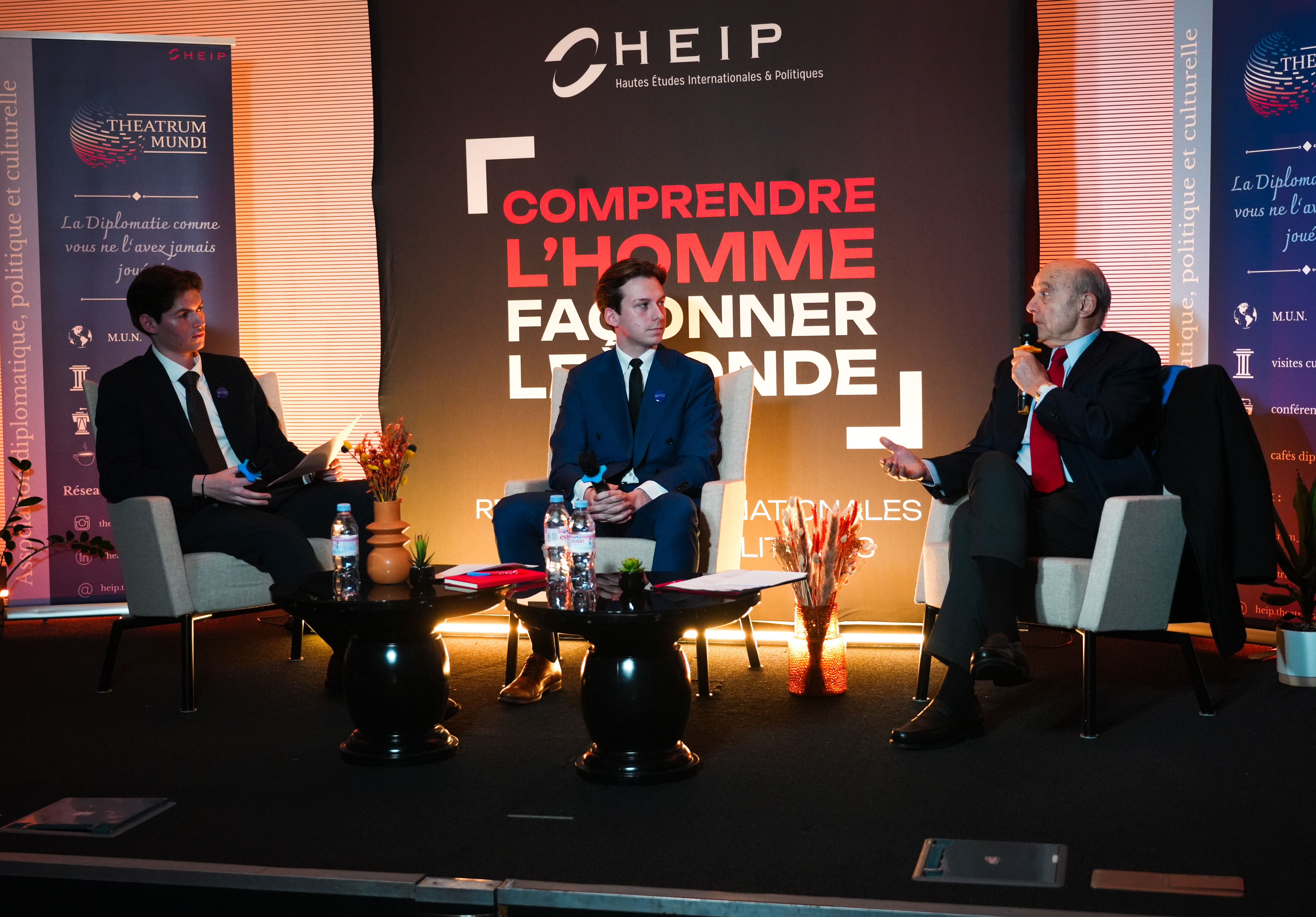
Where are our campuses located?
The Public Policy, CSR & Transitions program is offered at three campuses: Paris, Lyon, and Bordeaux.
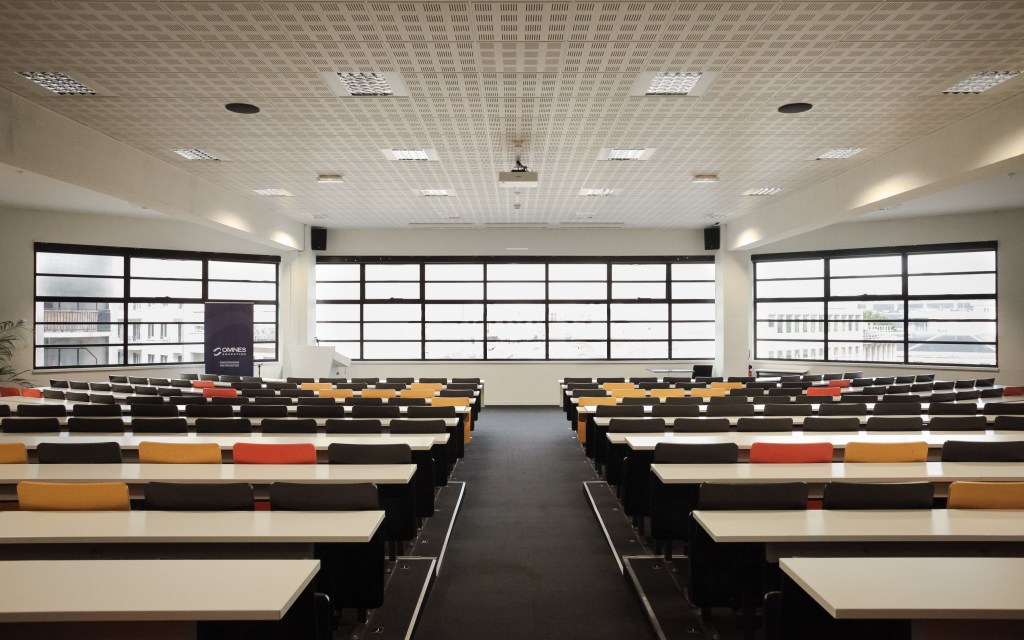
Our three campuses in Paris, Lyon, and Bordeaux are strategically located in the heart of major French cities, offering our students direct access to a dynamic network of businesses and institutions. Designed to foster an optimal learning experience, these modern, connected spaces allow students to enjoy a vibrant student life, rich in cultural, community, and athletic events.
Are the facilities accessible to people with disabilities?
The admissions process is accessible to people with physical disabilities, as the tests can be completed entirely online.
For individuals with invisible or mental disabilities, the admissions teams can adapt the exams.
All campuses are accessible to people with limited mobility.

Last update on