


DISCOVER THE WORLD.
UNDERSTAND ITS STRENGTHS. BUILD YOUR INTERNATIONAL CAREER.
In a world where geopolitical balances are rapidly shifting—with rising tensions among major powers, migration crises, economic rivalries, and diplomatic upheavals—the ability to analyze international dynamics and understand the mechanisms of cooperation has become a fundamental and highly sought-after skill.
HEIP’s Bachelor’s degree in International Relations & Cooperation, a three-year program taught entirely in English on the Paris campus , is the ideal gateway to acquiring—immediately after high school—a solid foundation in international relations, international law, and global institutions. You may not be an expert yet, but you’ll become someone who understands global power dynamics, masters the tools for analyzing contemporary issues, and is prepared to thrive in multicultural and international environments.
This program is particularly well-suited for high school graduates who wish to study entirely in English, develop a global perspective on international affairs, and join public organizations, NGOs, European institutions, or companies with an international focus.
What type of degree is awarded?
- Upon successful completion of the three-year program, this program awards an institutional certificate titled “Bachelor of International Relations and Cooperation,” issued by HEIP, an independent institution of higher education governed by the law of 1875.
- Each successfully completedyear of study is also worth 60 ECTS credits, for a total of 180 ECTS credits upon completion of the bachelor’s degree.
- The European Credit Transfer and Accumulation System facilitates the recognition of academic achievements and mobility within the European Higher Education Area.

What courses are offered in the Bachelor’s program in International Relations & Cooperation?
This program is structured around six course units, which combine expertise in political science, an understanding of international systems, historical and philosophical analysis, and the development of professional and methodological skills. The program incorporates active teaching methods, including case studies, simulations, practical projects, seminars, and group work.
In the first year (Bachelor’s Year 1), the program combines a solid core curriculum in political science, geopolitics, economics, history, and political philosophy—taught entirely in English—with two specialized modules focused on contemporary international relations and cooperation. This dual approach allows students to acquire fundamental analytical tools before applying them to the realities of the international arena.
First-Year Courses(Bachelor’s Year 1)
Post-Baccalaureate Admission · Comprehensive 1-Year Program ·430 hours·60 ECTS credits
UE 1 · Politics and Social Sciences
- Introduction to Geopolitics (Fall Semester)
- Introduction to Political Science (First Semester)
- The Influence of Popular Culture on Contemporary Politics (S1)
- “Red Thread” Project and Lecture Series
UE 2 · Contemporary Issues and Transformations
- African Regional and State Politics (S2)
- Middle East Regional and State Politics (S2)
- Europe and European Governance (S2)
UE 3 · Understanding the International World
- Comparative Political Systems and Institutions (S1)
- Macroeconomics and the Politics of the Global Economy (Fall Semester)
- A Changing Geopolitical and Economic Order (S2)
- The Nature, Functions, and Limits of Law – UN and ICC (S2)
UE 4 · History and Philosophy
- A Timeline of International Relations from World War I to the Present (S1)
- Major Trends in Economic Theory (S1)
- Introduction to Political Philosophy (Spring Semester)
- Political Ideas in Modernity: Choices, Rights, and Challenges (S2)
UE 5 · Professional Skills
- Professional Writing (Fall Semester)
- SHIFT(s) 1: Break it all down and get a move on (S1 & S2)
- TECHAWAY – TECHFORALL (S2)
- Lectures and Tours
UE 6.1 & 6.2 · Foreign Languages · 1 modern language of your choice
Improve your language skills to navigate an international professional environment with ease.
- All courses are taught in English (S1 & S2)
- Second foreign language of your choice, based on the options offered on campus: German, Spanish, Italian, Arabic, Russian, Mandarin, Japanese, Portuguese (S1
, and S2)
Third-Year Courses(Bachelor’s Year 3)
Admission: 2 years of post-secondary education · Comprehensive 1-year program ·508 hours·60 ECTS credits
UE 1 — Politics & Social Sciences · S1 & S2
- Staying Up to Date on Current Events: International Affairs and Politics — 24 hours · 4 ECTS · Semester 1
- The Economic Power of States as a Geopolitical Tool — 6:00 p.m. · 2 ECTS · Fall Semester
- International Affairs and Modern Diplomacy — 18 hours · 2 ECTS · Second Semester
- Technology for the Common Good — 6:00 p.m. · 2 ECTS · Second Semester
- Political Marketing in the Digital Age — 24 hours · 4 ECTS · Second Semester
UE 2 — Contemporary Issues & Transformation of the World · S1 & S2
- The Post-Bipolar World — 24 hours · 4 ECTS · Semester 1
- Development Policy and the Migration Crisis — 24 hours · 4 ECTS · Fall Semester
- Contemporary Social Changes: Technology, Work, Power — 24 hours · 4 ECTS · Fall Semester
- Human Rights and Global Justice — 24 hours · 4 ECTS · Second Semester
UE 3 — Understanding the International System · S1 & S2
- Sustainability and Corporate Responsibility — European Directives — 20 hours · 4 ECTS · Fall Semester
- Peace, Conflict, and International Security — 30 hours · 5 ECTS · Fall Semester
- Geography and Power: Political Geography and Geopolitics — 24 hours · 4 ECTS · Second Semester
- International Economic Relations and Institutions — 18 hours · 2 ECTS · Second Semester
- Geopolitics of the Americas — 6:00 p.m. · 2 ECTS · Second Semester
UE 4 — History & Philosophy · S2
- Art as Propaganda in the Post-World War II Era — 24 hours · 4 ECTS
- Contemporary Political Philosophy — 24 hours · 2 ECTS
- The Role of Heroes in Contemporary Politics — 6:00 p.m. · 2 ECTS
UE 5 — Professional Skills · S1 & S2
- SHIFT(s) 3 — Committing to Change — 6:00 p.m. · 1 ECTS · Fall Semester
- Internship Report — 2 ECTS · Second Semester
UE 6 — Foreign Languages · 1 modern language of your choice
All courses are taught in English.
In addition, choose 1 language from the 9 available: Spanish · French (FLE) · Japanese · Italian · German · Portuguese · Russian · Arabic · Mandarin — 18 hours per semester (S1 & S2)
Learning Objectives: Lay the groundwork for analyzing and understanding the world
By the end of this first year of the bachelor’s program, you will be able to:
- Master the fundamentals of international relations: understand major comparative political systems, multilateral institutions (UN, ICC, EU), and the dynamics of the global geopolitical order.
- Analyze contemporary issues using interdisciplinary approaches that combine political science, economics, history, and political philosophy.
- Understand the dynamics of international cooperation— both regional (Africa, the Middle East, Europe) and global—as well as the power dynamics that shape them.
- Develop methodological rigor in the production of analytical writing in English and in the oral presentation of analyses of international issues.
- Use multiple languages to access academic and professional sources, reports, and publications worldwide.
Teaching Methods: Learning Through Analysis and Intercultural Exchange
Starting in your first year, you’ll develop your critical thinking skills and your ability to discuss complex international issues—all in English. The curriculum is based on:
- International case studies drawn from real-world crises, negotiations, and cooperative efforts (EU governance, regional conflicts, UN institutions).
- Diplomatic simulations and role-playing exercises to replicate the dynamics of negotiations between state and non-state actors (NGOs, regional organizations, multinational corporations).
- Group projects in English that combine research, debate, and structured argumentation.
- Seminars and lecture series led by professionals from the fields of diplomacy, international organizations, development, and the global private sector.
Each semester, students receive support in developing their career plans and fostering their international perspective (SHIFT(s) module: Break it all down and get a move on).
Assessment Criteria: Analyze, Argue, and Persuade in English
Course assessment is based on comprehensive ongoing evaluation, designed to assess your ability to apply your knowledge to real-world international issues:
- Case studies in English: analysis of a geopolitical situation, a regional crisis, or a cooperation mechanism based on a variety of documentary sources.
- Practical exercises: writing analytical or summary reports modeled after the deliverables expected by international organizations and public institutions.
- Written reports with oral presentations: defend your analyses before a panel to develop, starting in your bachelor’s program, your ability to present, brief, and persuade in English.
Languages: Total Immersion Right from the Start
Since this program is taught entirely in English, all courses, assessments, and academic assignments are conducted in that language. This complete immersion is a decisive advantage for students pursuing an international career.
In addition, you are required to study a second modern language of your choice starting in the first year:
German · Spanish · Italian · Portuguese · Mandarin · Japanese · Arabic · Russian · French as a Foreign Language
Proficiency in Arabic, Mandarin, Portuguese, or Spanish is a direct strategic advantage for gaining access to the geographic regions most sought after by recruiters from international organizations and the cooperation and development sectors.
Degree and Further Education
Upon successful completion of the three-year program, students receive an Institutional Certificate in “Bachelor of International Relations & Cooperation” issued by HEIP, an independent institution of higher education (under the 1875 law).
Each successfully completed year of study is worth 60 ECTS credits, which are recognized throughout the European Higher Education Area.
This bachelor’s degree is the natural gateway to HEIP master’s programs (Bac+5), including:
Career Prospects: What Careers Can You Pursue After Earning a Bachelor’s Degree?
This bachelor’s degree program lays a solid analytical foundation for further study at the MSc level and provides opportunities for initial professional experience in international settings:
- Project Assistant at an international organization (UN, European Union, OECD)
- Staff Member in an International or European Affairs Department
- Program Assistant at a Humanitarian or Development NGO
- Monitoring and Analysis Specialist at a think tank or research center specializing in international relations
- Assistant at an embassy or a bilateral cooperation office
- International Communications Specialist at a public institution or a company with a global presence
- Parliamentary assistant working on European or international issues
Professional Development: A Gradual Immersion in the Field
Internships may be completed each year after the end of the academic term at international organizations, public institutions, NGOs, research firms, or companies with an international presence, either in France or abroad.
The third-year internship is required to earn the degree. It is a formative experience that directly prepares students for admission to a master’s program or for entry into the workforce in the fields of international cooperation, diplomacy, or international affairs.
What are the course fees?
Tuition
For the 2026–2027 academic year, tuition for the Bachelor’s program is €8,990 per academic year. The CVEC fee must be paid separately before the start of the academic year, after enrollment.
Application Fee
A €70 application fee is required when submitting the application.
Application Fee
A mandatory fee of 700€ must be added to the total cost of the training program. This fee gives you access to
personalized support upon your arrival in France (administrative procedures, settling in, integration).
These rates apply to the 2026–2027 school year and are subject to annual review.
Practical Information
Who are our teachers?
The courses in the Bachelor’s program in International Relations & Cooperation are taught by associate professors, diplomats, researchers in international relations, and experts from multilateral organizations, all of whom hold at least a master’s degree and have significant professional experience gained at embassies, intergovernmental organizations, think tanks specializing in geopolitics, or in the international divisions of companies and public institutions.
Their dual expertise—academic and practical—ensures that the curriculum is grounded in the realities of the global stage, enriched with concrete case studies drawn from diplomatic negotiations, cooperation missions, and operational geopolitical analyses. Teaching in English within a 100% international program is part of their daily routine, ensuring that our students experience total linguistic and professional immersion from their very first year.
Learn more about our faculty.
Where are our campuses located?
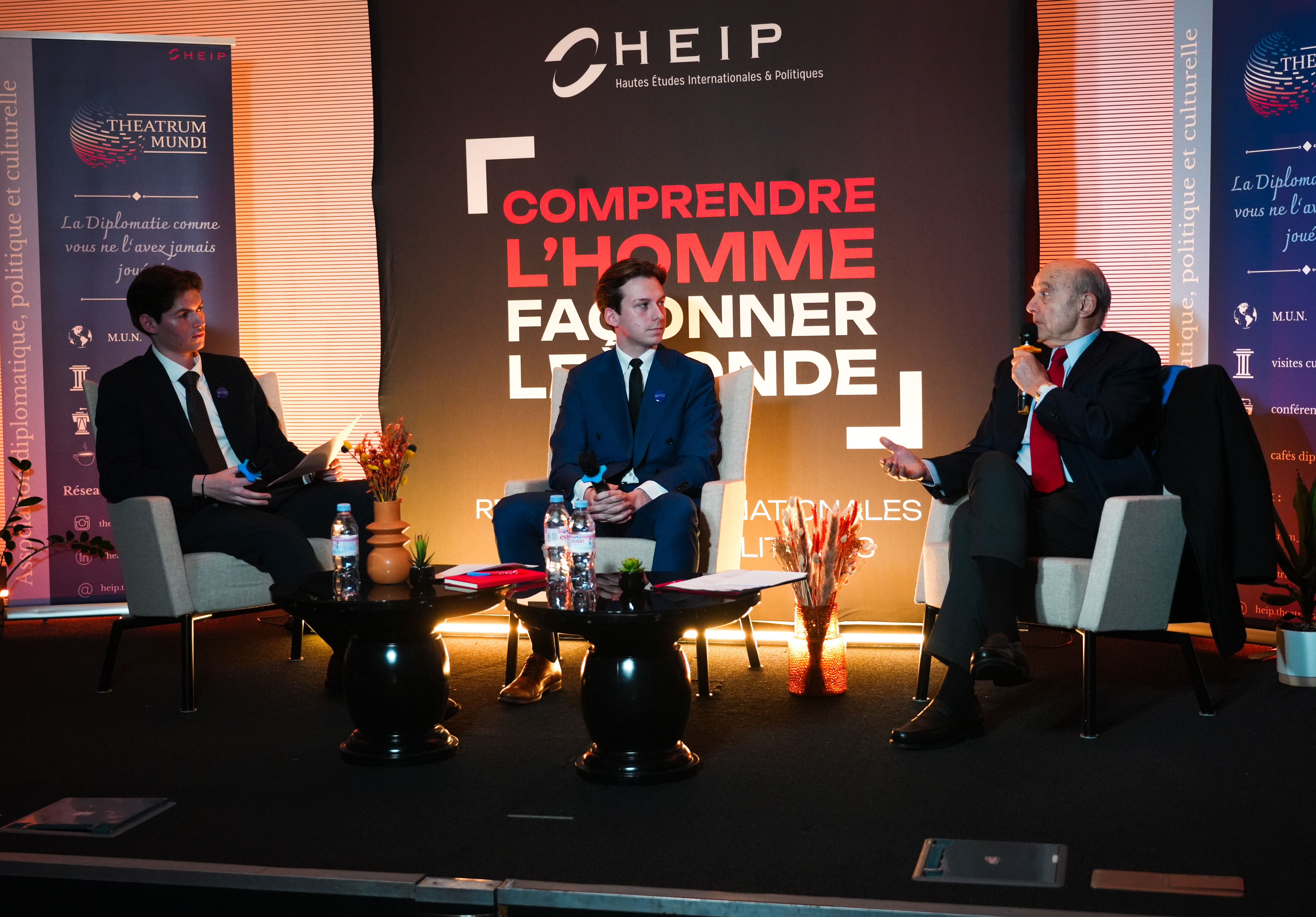
The Bachelor’s program in International Relations & Cooperation is offered exclusively on the Paris campus .
As France’s political capital and a European diplomatic hub, Paris places you at the heart of the embassies, European institutions, and international organizations that shape the global stage. It’s the ideal environment to build your first international network and secure internships at the organizations that shape global cooperation.
Are the facilities accessible to people with disabilities?
The admissions process is accessible to people with physical disabilities, as the assessments can be completed entirely online. For individuals with invisible or mental disabilities, the admissions teams can adapt the assessments.
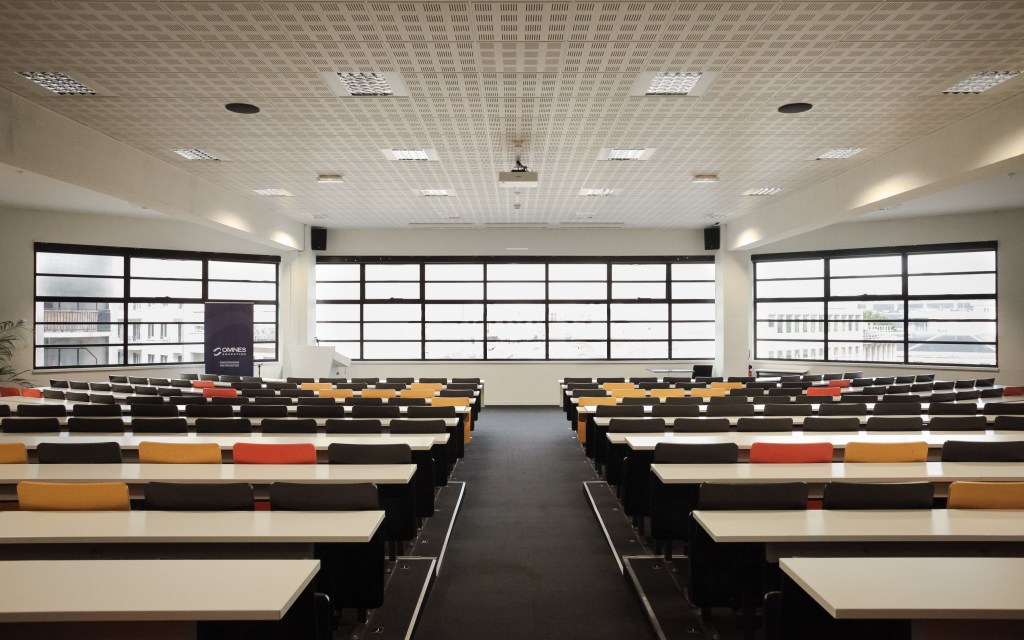
All campuses are accessible to people with limited mobility.
Disability Coordinator
Paris: Farida Cherkaoui
Email

Last update on