



UNDERSTANDING INFLUENCE,MASTERING PUBLIC SPEAKING, STARTING TODAY
In a world where every statement can make or break a reputation, where public opinion campaigns play out in real time on social media as well as in the corridors of power, political communication and lobbying have emerged as fundamental—and rare—skills. Political parties, ministerial offices, communications agencies, businesses, and European institutions are seeking professionals trained to analyze the dynamics of influence and deliver high-impact messages.
HEIP’s Bachelor’s Degree in Political, Institutional, and Lobbying Communication is the ideal gateway to building, right after high school, a solid foundation in the challenges of public communication, persuasion, and institutional relations. You may not yet be an influence strategist, but you’ll become someone who understands the workings of power, masters the codes of political communication, and is prepared to apply them with rigor.
This program awards an HEIP Institutional Certificate, recognized within the French private higher education system.
What type of degree is awarded?
- Upon successful completion of the three-year program, this program awards an institutional certificate titled “Bachelor’s in Political, Institutional, and Lobbying Communication,” issued by HEIP, an independent institution of higher education governed by the law of 1875.
- Each successfully completedyear of study also earns 60 ECTS credits, for a total of 180 ECTS credits upon completion of the bachelor’s degree.
- The European Credit Transfer and Accumulation System facilitates the recognition of academic achievements and mobility within the European Higher Education Area.

What courses are offered in the Bachelor’s program in Political, Institutional, and Lobbying Communication?
In the first year (Bachelor’s Year 1), the program combines a solid core curriculum in political science, law, and economics with two specialized modules focused on institutional communication and lobbying.
This dual approach allows students to acquire fundamental analytical tools before applying them to the realities of contemporary influence communication.
First Year(Bachelor’s Year 1)
UE 1 · Politics and Society
To provide the historical and political context necessary for understanding contemporary societies and the dynamics of power.
- Political History of France, Semester 1
- Overarching Project, Semesters 1 & 2
- Lecture Series, Semester 1
- History of International Relations, Semester 1
- Introduction to Political Science, Semester 2
UE 2 · Law and Public Institutions
Understanding the legal and institutional framework governing public communication and lobbying activities.
- Introduction to Law, Semester 1
- Political Institutions, Semester 1
- History of the State, Semester 1
- Specialization: Fundamentals of Political Communication, Semester 2
UE 3 · Contemporary Issues and Global Changes
Develop an analytical perspective on current political, media, and institutional events.
- Analysis of International Current Events, Semester 1
- SHIFT(s) 1: Decode to Act, Semesters 1 & 2
- International Affairs: International Relations & Diplomacy, Semester 2
- Lecture Series, Semester 2
- Major: Political Marketing, Semester 1
UE 4 · Economy, Finance, and Society
Acquire a basic understanding of economics to comprehend the major economic equilibria that influence public policy decisions.
- Fundamentals of Macroeconomics, Semester 1
- Major Schools of Economic Thought, Semester 2
- TECHAWAY-TECHFORALL, Semester 2
UE 5 · Methodology and Professional Development
Develop the intellectual and communication skills necessary to produce rigorous analyses and deliver persuasive presentations.
- Academic Research Methods, Semester 1
- Public Speaking Methodology, Semester 1
- The Art of Learning, Semester 2
UE 6.1 & 6.2 · Modern Languages (First Language: English + Second Language + Third Language of your choice)
Improve your language skills to navigate an international professional environment with ease.
- English(S1 & S2)
- Second and third foreign languages (LV2 and LV3) may be chosen from among the options offered on campus: German, Spanish, Italian, Arabic, Russian, Mandarin, Japanese, Portuguese(S1
, and S2)
Learning Objectives: Lay the groundwork for analyzing and persuading
By the end of this first year of the bachelor’s program, you will be able to:
- Gain a solid understanding of the fundamentals of public law, political institutions, and the history of international relations in order to contextualize the major dynamics of influence communication.
- Analyze political and institutional communicationstrategies by drawing on conceptual tools from political science, law, and rhetoric.
- Understand the dynamics of lobbying—including its key players, networks, and techniques of influence—as well as the main national and European regulatory frameworks that govern them.
- Develop methodologicalrigor in the production of analytical writing and the oral presentation of structured arguments.
- Use two modern languages to access resources, discussions, and publications on political communication and public affairs around the world.
Teaching Methods: Learning Through Analysis and Role-Playing
Starting in your first year, you’ll develop your critical thinking skills, your ability to argue a point, and your oral communication skills as you tackle real-world situations. The curriculum is based on:
- Case studies drawn from real-life political campaigns, communication crises, and institutional lobbying efforts.
- Simulations and role-playing exercises to recreate the trade-offs between communications professionals, elected officials, journalists, and lobbyists.
- Group projects and well-reasoned presentations that combine documentary research with compelling presentations.
- Seminars and lecture series led by professionals from communications agencies, political consulting firms, institutions, and public affairs departments.
Each semester, students receive guidance in developing their career plans and in building their communication and influence skills.
Assessment Criteria: Reasoning, Arguing, and Persuading
Course assessment is based on comprehensive continuous assessment, designed to evaluate your ability to apply your knowledge to real-world challenges in communication and influence:
- Case Studies: Analysis of an actual political communication campaign or lobbying strategy based on a variety of documentary sources.
- Practical exercises: drafting position papers, communication plans, or strategic summaries modeled after the deliverables expected by agencies and institutions.
- Written reports with oral presentations: defend your analyses before a panel to develop, starting in your bachelor’s program, your ability to persuade and structure your reasoning in public.
Languages: An International Perspective Integrated from the Start
Starting in your first year, you’ll study business English—the essential language of European institutions and international organizations—as well as a second modern language chosen from the options offered on your campus:
German · Spanish · Italian · Portuguese · Mandarin · Japanese · Arabic · Russian · Advanced English
Proficiency in English is a direct strategic asset for pursuing careers in European institutions, international lobbying firms, and the communications departments of major organizations.
Degree and Further Education
Upon successful completion of the three-year program, students receive an institutional certificate titled “Bachelor’s in Political, Institutional, and Lobbying Communication” issued by HEIP, an independent institution of higher education (under the 1875 law).
Each successfully completed year of study is worth 60 ECTS credits, which are recognized throughout the European Higher Education Area to facilitate academic mobility and make your academic path easier to understand.
This bachelor’s degree is the natural gateway to HEIP master’s programs (Bac+5), including:
Career Prospects: What Careers Can You Pursue After Earning a Bachelor’s Degree?
This bachelor’s degree program lays a solid foundation for pursuing a master’s degree and provides opportunities for initial professional experience in political, institutional, and media settings:
- Communications Assistant at a political firm or local government agency
- Junior Institutional Communications Specialist
- Employee at a communications or public relations agency
- Parliamentary assistant or staff member in an elected official’s office
- Project Manager in a Public Affairs Department
- Assistant at an international organization or a European institution
- Media Monitoring and Analysis Specialist at a company or federation
- Editorial Assistant at a Political or Institutional Media Outlet
Professional Development: A Gradual Immersion in the Field
Internships may be completed each year after the end of the academic term at communications agencies, political consulting firms, public institutions, or corporate communications departments.
The third-year internship is required to earn the degree. It is a formative experience that directly prepares students for admission to a master’s program or for entering the workforce in the field of political communication and public affairs.
What are the course fees?
Tuition
For the 2026–2027 academic year, tuition for the Bachelor’s program is €8,990 per academic year. The CVEC fee must be paid separately before the start of the academic year, after enrollment.
Application Fee
A €70 application fee is required when submitting the application.
Non-European Student
A mandatory fee of 700€ must be added to the total cost of the training program. It gives you access to
personalized support upon your arrival in France (administrative procedures, settling in, integration).
These rates apply to the 2026–2027 school year and are subject to annual review.
Practical Information
Who are our teachers?
All of our speakers are associate professors or experts in their fields.
They all hold a master’s degree and have significant professional experience in the fields of political communication, public affairs, institutional lobbying, media relations, and influence strategy.
Learn more about our faculty.
Where are our campuses located?
The Public Policy, CSR & Transitions program is offered at three campuses: Paris, Lyon, and Bordeaux.
The Bachelor’s program in Political, Institutional, and Lobbying Communication is offered at three campuses: Paris, Lyon, and Bordeaux.
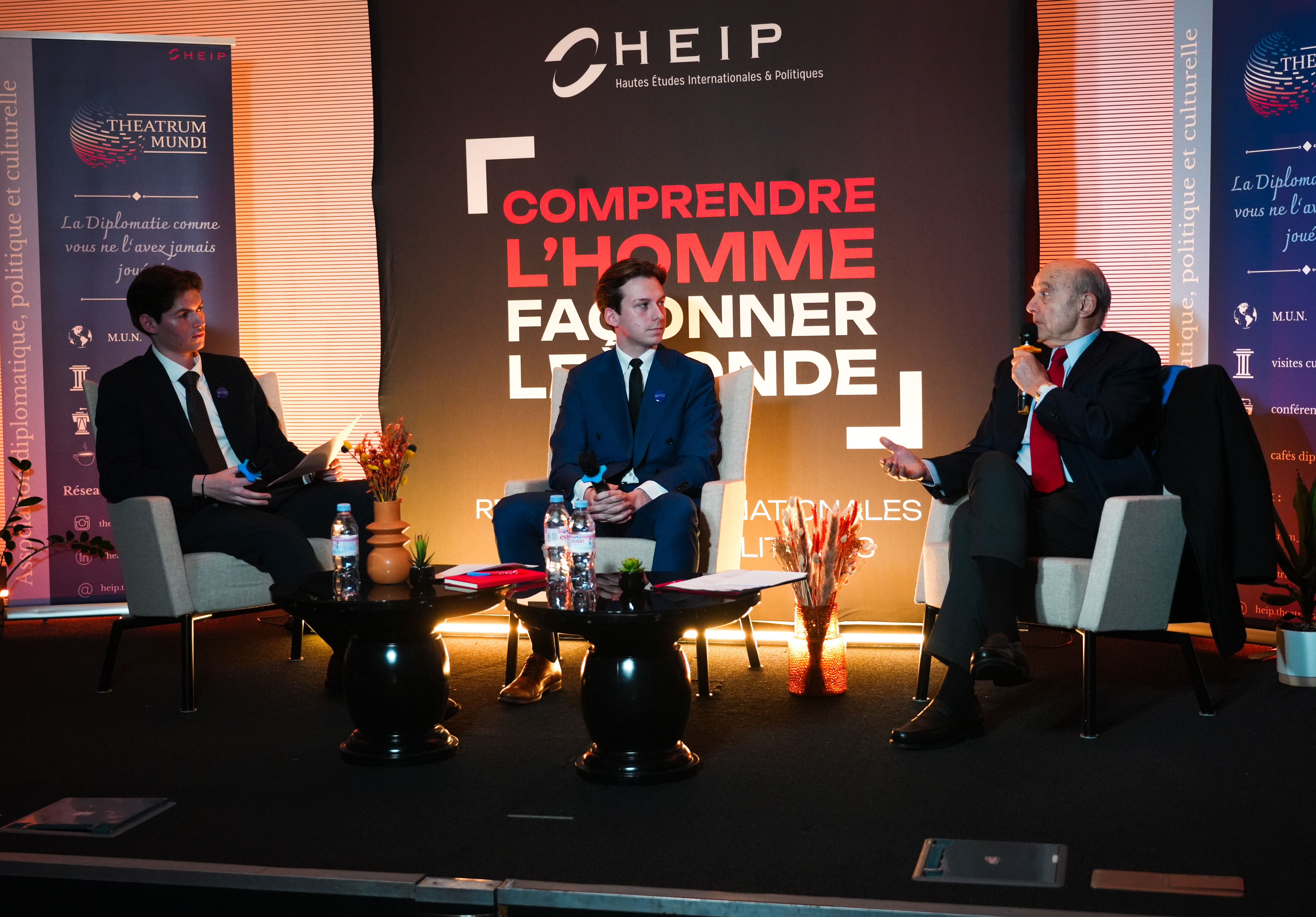
Paris: As the epicenter of French political and media power, Paris places you at the heart of ministerial offices, political newsrooms, and agencies specializing in influence communication. It’s an ideal environment for building your professional network from the very first years of your studies.
Lyon: A dynamic metropolis with active regional and European institutions, Lyon offers a rich ecosystem for students interested in local public affairs, institutional lobbying, and communications for local governments and professional organizations.
Bordeaux: A crossroads between the public sector, a vibrant nonprofit community, and companies seeking institutional visibility, Bordeaux connects you with local and regional stakeholders whose communication and advocacy needs are rapidly expanding.

Are the facilities accessible to people with disabilities?
The admissions process is entirely online, making it accessible to applicants with physical disabilities.
Reasonable accommodations can be provided for invisible or cognitive disabilities upon request to the admissions teams.
All HEIP campuses are accessible to people with limited mobility.

Last update on