


Our history
Thinking, debating, acting in a world in transition
Founded in 1899 by Jeanne Weill (known as Dick May), an avant-garde intellectual figure, the École des Hautes Études Internationales et Politiques (HEIP) has established itself as a leading institution in training future leaders in political science and international relations. For over 125 years, HEIP has perpetuated a tradition of academic excellence whilst constantly renewing itself to meet contemporary challenges.
A heritage of excellence
HEIP benefits from a rich intellectual and humanist heritage. From its origins, the school has hosted the teachings of influential figures such as Anatole France, Émile Durkheim, Aristide Briand, Pierre Mendès-France and Maurice Schumann (director from 1980 to 1986). This tradition of educational innovation continues to inspire our pedagogy, founded on openness to different political sensibilities and the exercise of critical thinking.
Our mission
Within an open and interdisciplinary academic setting, we enable each student to think independently, engage in debate and act on the challenges facing our era.
Our values
HEIP is built upon five fundamental values that guide our daily action :
- The exercise of republican pluralism
We cultivate diversity of opinion whilst respecting republican principles - The development of critical thinking
We train minds capable of analysing, questioning and thinking for themselves - Understanding contemporary issues
We place current challenges at the heart of our teaching - The promotion of civic engagement
We encourage civic action and social responsibility - Immersive and tradigital pedagogy
We combine pedagogical innovation with academic excellence
The school of debate and critical thinking
We train minds capable of confronting complexity without succumbing to oversimplification. Through analysis, research and the intersection of disciplines, our students develop an in-depth understanding of political science, international relations and contemporary transformations. In a demanding and respectful environment, we cultivate rational debate where the clash of ideas feeds understanding.
The school of transitions
We examine the major transformations of our time: ecological, diplomatic, cultural and technological transitions. Faced with the challenges of disinformation, polarisation and multilateralism, we train citizens capable of taking action in an ever-changing society of opinion.
The school of public action
Engagement is at the heart of our pedagogy. Through immersive experiences – simulations, debates, field projects, international cooperation on our Paris, London and Geneva campuses – we give each student the power to act and influence their environment, whether in public, diplomatic, civic, institutional or voluntary action.
Multiculturalism and diversity
HEIP is a place where diversity of opinion and culture is celebrated. With 20% international students and more than 50 nationalities represented, our students operate in a truly multicultural environment. This immersion in diversity encourages exchanges and cooperation across borders, preparing our students to work effectively in varied international contexts.
A school that rejects oversimplification and cultivates thought as a transformative power.
126
Years of History
1500
Students
6
Campuses
32
Academic Partnerships Worldwide
Current Professors at HEIP
All our lecturers have a minimum level of qualification equivalent to or higher than that of the courses they teach.
They are either experienced professionals in the target profession, with solid expertise in the field, or teacher-researchers providing an up-to-date and rigorous academic vision.
On request, our Education Department can provide a full list of our lecturers, together with details of their qualifications and professional experience.
Aurélie Tardieu: Assessor Judge at the National Court of Asylum Law, Secretary General of the Francophone Network of International Law, Lecturer at the University of Caen
Florent Stora: Diplomatic Adviser at the Permanent Mission of France to the OECD
Arnaud Benedetti: Editor-in-Chief of Revue Politique et Parlementaire
Dominique de Combles de Nayves: Court of Auditors, Former Ambassador and Chief of Staff at the Ministry of Foreign Affairs, Cooperation, and Defense
General Watin Augouard: Founder of the International Cybersecurity Forum, President of the National Institute for Cybersecurity and Resilience of Territories
Pierre Mourlevat: General Controller of Economic and Financial Affairs
Philippe Guibert: Editor-in-Chief of Médium journal
Gilduin Davy: Associate Professor of Law History, University of Paris X Nanterre
Frédéric Tristram: Lecturer in Economic History, Paris I
Benjamin Morel: Lecturer in Public Law, University of Paris II Panthéon-Assas
Richard Amalvy: General Director of the Brazzaville Foundation
Marine Mathé: Public Affairs Consultant
Morgan Donot: Doctor of Political Science, Associate Researcher at the University of Paris 3 – Sorbonne Nouvelle
Sandrine Simon de Bessac: Founder of the School of Orators, Professor of Eloquence, Law and Political Science, Lawyer, Business Coach, Speaker
Olivier Rouquan: Political Scientist, Speaker, and Associate Researcher
Fabrice Rizzoli: Teacher – Speaker, Project Manager, Political Scientist
Grégory Portais: Professor of Public Law, Administrative Law, Public Administration, Fundamental Freedoms, and Note-Taking, Higher Education, and Pre-Competition Schools for Legal and Administrative Exams
They taught at HEIP
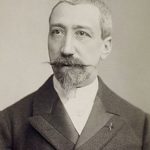
Anatole France
Writer, Nobel Prize for Literature 1921, professor of “Journalistic Writing” at HEIP from 1902 to 1903
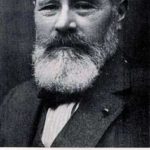
Arthur Fontaine
Drafter of the Treaty of Versailles (1919), First President of the International Labor Organization from 1919 to 1931, professor of “Right to strike” at HEIP from 1900 to 1915
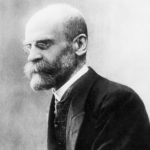
Émile Durkheim
Founding member of modern French sociology, Founding member of the League of Human Rights, professor of “Sociology” at HEIP from 1903 to 1909
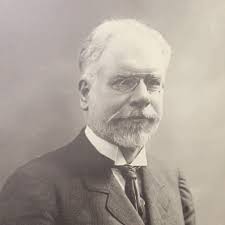
Leon Duguit
French jurist, Founder of the School of Public Service, professor of “Questions of general law” at HEIP from 1907 to 1911
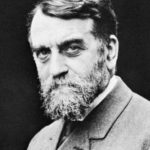
Paul Vidal De La Blache
Founding member of modern geography, Member of the Academy of Moral and Political Sciences, professor of “Geography” at HEIP from 1901 to 1917
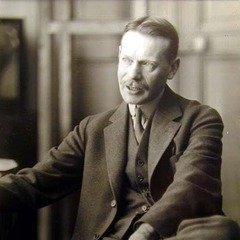
André Siegfried
Founding member of electoral sociology, Member of the French Academy, professor of “Democratic Systems” at HEIP from 1902 to 1905
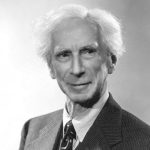
Bertrand Russell
British philosopher, Nobel Prize for Literature in 1950, professor of “Anglo-Saxon political philosophy” at HEIP from 1910 to 1911
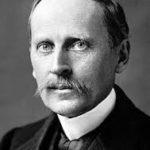
Romain Rolland
Writer, Nobel Prize for Literature in 1915, professor of “Literature and literary and musical criticism” at HEIP from 1902 to 1911
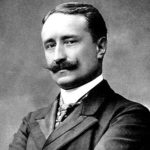
Paul Deschanel
President of the French Republic in 1920, Member of the French Academy from 1899 to 1922, Professor of “Political and International News” at HEIP from 1908 to 1918
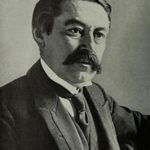
Aristide Briand
President of the Council of Ministers 1909 – 1929, Nobel Peace Prize in 1926, professor of “Social Questions” at HEIP from 1901 to 1902
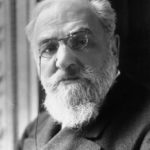
Leon Bourgeois
President of the Senate from 1920 to 1923, Nobel Peace Prize 1920, professor of “Democratic Doctrines” at HEIP from 1901 to 1911
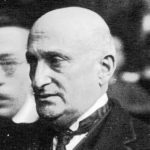
Victor Basch
Co-founder of the Human Rights League, died for France in 1944, professor of “Political and artistic theories” at HEIP from 1903 to 1921

Paul Henri d’Estournelles de Constant
Nobel Peace Prize in 1909

Henri Lafontaine
Nobel Peace Prize in 1913

Ferdinand Buisson
Nobel Peace Prize in 1927

René Cassin
Nobel Peace Prize in 1968
The strength of a group

HEIP is part of the OMNES Education group.
A leading European private higher education operator, OMNES Education is the only group to offer a wide range of lifelong learning programs that cover key areas of Higher Education and Research:
Communication, Creation, Engineering, Management, and Political Science & International Relations.
Each of the schools within the group has its own unique identity:
CEI, Créa Genève, ECE, ESCE, EU Business School, INSEEC, IUM Monaco, Sup Career, IFG Executive Education, HEIP-CEDS, Sup de Création, and Sup de Pub all have strong individual identities, but share common values: a highly qualified faculty and recognized professionals.
Their ambition is to enhance the student experience in order to improve employability. The schools provide our students with a distinctive pedagogical experience, with a clear objective: to develop their employability to the fullest. Regardless of their career paths, graduates of OMNES Education benefit from easy access to employment, not only upon graduation but throughout their professional careers.
The schools are ideally located in Paris, Bordeaux, Lyon, Chambéry, Beaune, Rennes, as well as in London, Monaco, Geneva, Abidjan, Barcelona, Munich, and San Francisco. They are housed in modern facilities equipped with the latest technologies, offering a pleasant and functional study environment designed for optimal learning.
Last update on